


This is Part 2 of a two-part post. Take a look at Part 1.
Once you’ve thought deeply and analytically about your brand, your audience, and the results you want from your website, you’ll be ready to delve into details. Below, we’ve explained in further detail how to style your copy and images so that they serve your organization’s story.
Your Copy
1. Use your Belief Message: Finally, you can draft the story you’ve been imagining and re-imagining while completing the strategy work in Part 1. Mission Minded advises nonprofits, foundations, and other do-gooder organizations to use a Belief Message—our take on an “elevator pitch”—on their homepages.
Your Belief Message articulates one of your organization’s deeply held beliefs or values. It gives a brief overview of what you do and why it matters, but it doesn’t go into much detail. The idea is to get you and your audiences on the same page—from there, they can make a firmer commitment to your mission. Once they understand you, they might learn more about your programmatic details, volunteer, or donate. Before all that, though, they need to understand your mission without feeling overwhelmed.
Your Belief Message is a mini-version of the story told by your whole web presence. You’ll paint a portrait of your organization, the problem you exist to solve, and the beneficial ending you want to see. Then, you’ll name some steps you’ll take to get there.
If your audiences feel moved by the beneficial ending—your goal—they will want to help you along the way. Phil Kilbridge of Habitat for Humanity Greater San Francisco sets a great example of using the Belief Message effectively.
Alternatively, you can name what could happen if your organization does not accomplish its goal. In this way, you can leverage your audiences’ fear or concern. They’ll depend upon you to ensure the negative outcome does not come to pass.
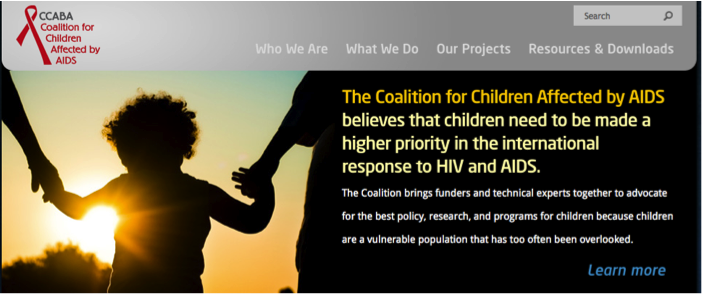
Mission Minded client Coalition for Children Affected by AIDS takes this approach in its Belief Message. The message, which lives on the homepage, suggests that children with AIDS would be overlooked if not for CCABA.
2. Follow these tips of the trade: When crafting your copy, follow all or some of the guidelines below, depending on what your audiences need.
a. Keep it simple: Use bullet points whenever possible. Keep your paragraph length under 4 lines.
b. Use the word “you”: You’ll capture your reader’s attention this way. As you can see, we follow this rule fastidiously!
c. Employ the first person in blog posts or longer narratives: This style adds a personal touch.
Your Design:
1. Use close-up photography: Your story should convey emotion, and no visual conveys emotion quite like a human face. By showing off your subjects’ facial expressions, your photos invite your viewer to sympathize with them—and with you, by proxy.
The website Mission Minded created for Children of Shelters, for example, focuses on the face of a happy little girl. Anyone who cares about the well-being of children will feel intrigued. Already, they’ll know something of the organization’s story: the organization focuses on children, particularly vulnerable ones. With that knowledge, the viewer will feel moved to learn more about the organization’s challenges and get involved, so they can help protect little girls like the one in the photo.
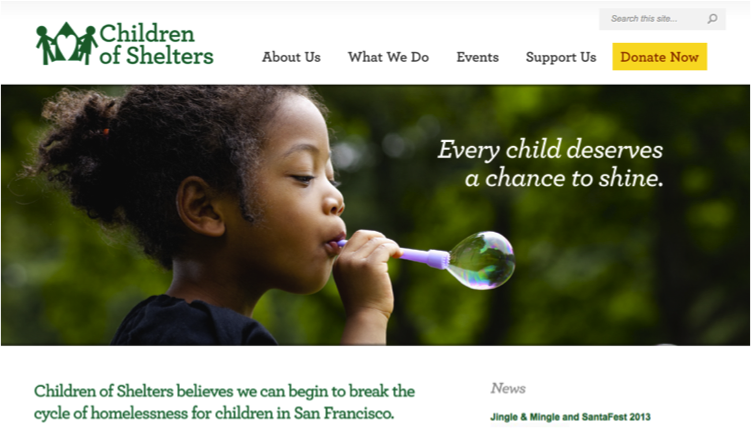
Close-up images draw your audience closer—literally and figuratively—than crowd shots, which make people seem like an abstraction or statistic.
2. Organize your information by importance: Which words or images best characterize your organization’s value, purpose, or personality? Make sure your visitors’ eyes travel to the most important information first.
On the website we designed for SFMade, the bright pink box draws attention to the phrase, “Yes! We still make things right here in San Francisco.”
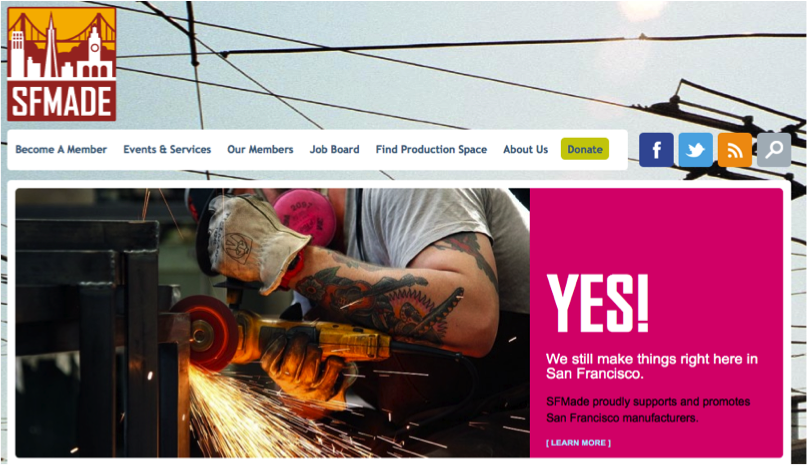
In an instant, these words express that 1) SFMade concerns manufacturers and 2) those manufacturers face a problem: not everyone understands that San Francisco makers are still active. Likeminded readers will want to know more about how SFMade supports San Francisco manufacturers—and how they can help.
Similarly, the site Mission Minded designed for Yale Center for Emotional Intelligence hones in on the phrase “Emotions Matter.”

This simple sentence establishes the goal that Yale Center works toward—promoting emotional health—and also suggests that some people may not yet appreciate the importance of emotional health. Just a few words or phrases can form the contours of a story; the rest of your copy and imagery will fill in.
3. Work with a professional designer: Though polished-looking templates exist, only a designer can craft unique images that instantly signal your personality. Some designers will likely fall within your price range, especially if they focus on the nonprofit sector. A professional designer will ensure that your site is easy-to-use, bug-free, and useful to your audiences. By making your layout intuitive, the designer makes sure that your audiences will stick around to hear all the details of your story. You can find samples of our web work on our site.
For more information on nonprofit websites, visit our archive of web-related posts.


